The Art of the Coaching Experiment (Not Another To-Do List)
Tests vs tasks. A review protocol. Table: task / habit / experiment.

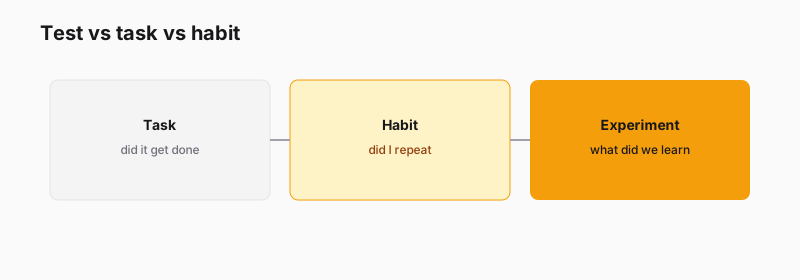
A to-do is a chore. An experiment is a question with a date. Progress tracks it. Clean language names it in their words. The discovery hour is not where you design it. After the Q3 money review, do not invent more tasks to feel productive. Invent better tests.
| Type | Question it answers | Review |
|---|---|---|
| Task | “Did it get done?” | Check / scold |
| Habit | “Did I repeat it?” | Streak |
| Experiment | “What did we learn?” | Data → next test |
Why Task Lists Fail
They turn you into a manager. Managers get ghosted. Experiments keep the client as the scientist.
The fix: every between-session action must answer a question. If it doesn’t, it’s a chore. Cut it.
How to Design One
- Question — “What happens if I send the current draft to two people?”
- Smallest version — two people, this week, no rewrite.
- Date + evidence — Thursday 4pm, sent folder.
- Review line — next session, first: “What did we learn?” not “Why didn’t you?”
Write it where they can see it. If they cannot picture Tuesday, shrink it.
Review Protocol (next session)
- What did you actually do?
- What happened?
- What did that teach us about the goal?
- Next test — smaller or different, not a longer list.
If they skipped, the experiment is the skip. Coach that. Do not add three new tasks to compensate.
What Most Coaches Get Wrong
They assign a habit and call it an experiment. Habits are fine. They are not tests.
They also review with shame. Shame produces fiction. Fiction produces a 9/10 that didn’t happen.
They stack experiments because the hour felt thin. One test. If the hour was thin, that’s a contract problem.
A Library of Good Tests (steal the shape, not the content)
- Send the current draft to two real buyers by Thursday.
- Say the working-agreement line once this week when a text arrives after 7.
- Sit in a 7-second silence after one question and note what they say next.
- Ask the partner the veto question before the next discovery close.
Each one has a date and a piece of evidence. None of them is “work on your mindset.” Mindset is not a test.
If they invent a better test in the room, take it. Your library is a starting shape, not a prescription.
Reviewing a Skip Without a Lecture
“The test was Thursday. Thursday passed. What did we learn about the test — too big, wrong day, or not actually yours?”
Then design the next test from that answer. If you lecture, they will produce a better story next time instead of a better test.
Three skips in a row is not a homework problem. It’s an engagement problem. Name it: keep, reshape, or complete. An experiment that never runs is a zombie goal wearing a checklist.
Write the question on the recap so next week’s you does not invent a new test. The question is the assignment. “Send two drafts” without “what will we learn” is a chore you will both resent.
If they come back with a surprise better test they actually ran, celebrate the run, not the surprise. Then design the next one from the data. Curiosity is the habit. The task list is the enemy.
Cap experiments at one per week even if they are ambitious. Ambition is how tests become lists. A small test that ran beats a beautiful plan that didn’t. Next week you get another one. That is enough. If they ask for a homework packet “to stay accountable,” refuse. Accountability is the review question, not a longer list. If they insist on five items, pick the one that would change the score. Park the rest. Parking is a coaching move. Packets are anxiety. Review last month’s experiments at the September scoreboard. If nothing ran, the problem is design, not character. Redesign. Do not add volume. A month of unrun tests is a curriculum problem hiding in 1:1. Shrink until a Tuesday is obvious, then run that. Nothing else counts.
When DIY Isn’t Enough
When last week’s test is buried in a transcript, you will invent a new one. A session card that surfaces the last experiment is the whole upgrade. Grow / Scale can hold the card. You still have to ask “what did we learn?”
Want the last experiment on the next session card? Let’s talk.